11.06.2026
Beyond Digital Channels: Why Hotels Need a Unified Guest Journey Platform
As hospitality technology evolves beyond disconnected solutions, hotels are adopting unified platforms that connect every guest touchpoint, improve efficiency, and deliver measurable business results.
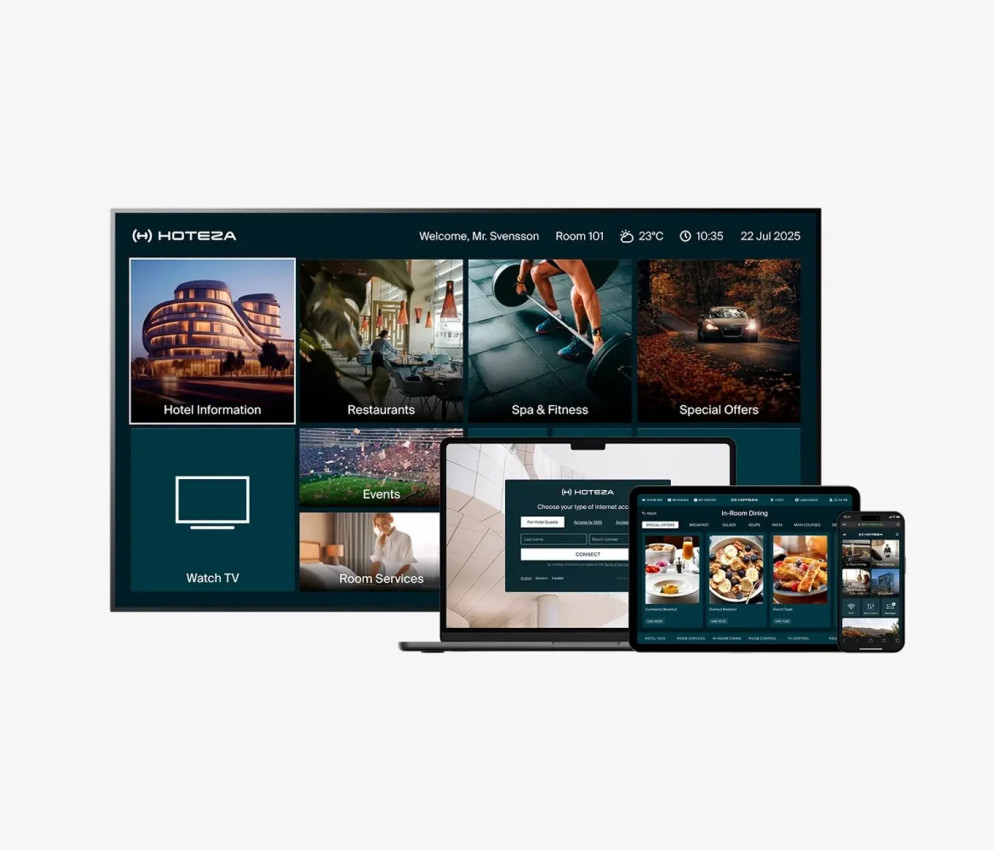
In a recent article published on Hospitality Net, Hoteza explores one of the hospitality industry’s most important challenges: fragmented guest journeys. The article examines why hotels are moving beyond standalone technologies and toward connected ecosystems that unify all guest touchpoints. It also looks at how this change can help hotels improve both guest satisfaction and corporate performance.
Hotels have used various technology solutions to meet specific needs. They set up separate systems for online check-in, guest messaging, in-room TV, loyalty programs, digital signs, and mobile apps.
While these solutions delivered value independently, they did not always communicate with one another.
This often caused inconsistent guest experiences. For example, a preference shared in one place might not show up elsewhere. A guest who upgraded their room before arriving could still get offers that do not apply to them. Different departments using different systems also made it hard to see the full guest journey.
According to the article, the industry is now moving toward a platform-based approach, in which every guest interaction becomes part of a connected experience rather than a collection of isolated transactions.
Why a Unified Guest Journey Matters
Today, travelers expect all interactions with a hotel to be seamless, regardless of the channel they use.
Whether they are checking in online, messaging the hotel, watching content on the in-room TV, ordering room service, or booking another stay, guests increasingly expect harmony across every touchpoint.
A unified guest journey platform helps make this happen by bringing together communication, personalization, content, and guest services in one place. The article points out that this setup helps both guests and hotel staff by simplifying and streamlining operations.
From Features to Business Outcomes
One main idea in the article is that hotels are moving away from choosing technology just for its features.
Now, hotel leaders look at technology for its real business impact, not just its features. They focus on metrics such as revenue growth, guest satisfaction, operational efficiency, loyalty, and direct bookings.
Instead of counting how many tools they use, hotels now focus on results. This focus on key performance indicators is changing how the industry judges technology.
Every Guest Interaction Is a Revenue Opportunity
We also explore how digital guest journeys create new revenue opportunities.
Pre-arrival communication can promote room upgrades and ancillary services. Mobile applications can showcase dining experiences and hotel amenities. In-room entertainment systems can surface customized recommendations, while AI-powered communication tools can proactively suggest services based on guest choices and behavior.
When these communications are coordinated across a connected platform, hotels can deliver offers that feel relevant and helpful rather than intrusive. The result is a guest experience that becomes both more customized and more commercially effective.
Operational Capability Continues as a Priority
Guest experience often receives the most attention in discussions of hospitality technology, but operational capability has become equally important.
Labor shortages, growing operational costs, and increasing guest expectations continue to place pressure on hotel teams. Automation and centralized management tools can help tackle these challenges by decreasing manual processes and streamlining routine tasks.
Business excellence and guest satisfaction are no longer separate goals. Increasingly, they are driven by the same technology foundation.
A Connected Future for Hospitality
The wider message of the Hospitality Net article is clear: hospitality technology is entering a new stage of maturity.
The conversation is no longer about adding more digital tools. It is about creating connected ecosystems in which every engagement adds to a broader business objective.
Hotels that embrace a consolidated platform approach may be better positioned to improve guest satisfaction, increase business efficiency, strengthen loyalty, and generate measurable business results.
Read the Full Article
This overview highlights only some of the key ideas discussed in the original publication.
To explore the complete perspective, including platform strategy, KPI-focused hospitality technology, revenue opportunities, and the role of connected guest journeys in boosting business performance, read the full article on Hospitality Net:
One Platform for Every Guest Touchpoint: How Hoteza Turns the Guest Journey into Concrete Results
